Delivery Control Snapshot
Accurate delivery reporting and a decision-ready plan in 3 days
If delivery feels busy but unpredictable — priorities keep shifting, reporting is inconsistent, and issues surface late — this is the fast way to establish what's happening, what's at risk, and what to do next.
30 minutes • straightforward advice • clear next step
Trusted by teams at
Built for senior leaders who need control fast
Designed for CIO, CTO, CPO, COO, Transformation Directors, Heads of PMO, VP Delivery, RevOps, Sales Ops, Service Ops, and Business Partner IT — across product delivery and multi-workstream change.
This is for you if
- •Status reporting looks fine, then delivery slips late and the RAID escalates.
- •Different teams report different versions of progress, dates, scope, and dependencies.
- •Forecasts change week to week and nobody trusts the assumptions behind them.
- •Prioritisation is noisy because capacity, cost, and value aren't being compared consistently.
- •Handoffs and decision points are slowing work down.
It's not for you if
- •You want a report that's easy to agree with but doesn't change anything.
- •You already have consistent reporting, stable prioritisation, and predictable delivery.
- •You're shopping purely on the lowest day rate.
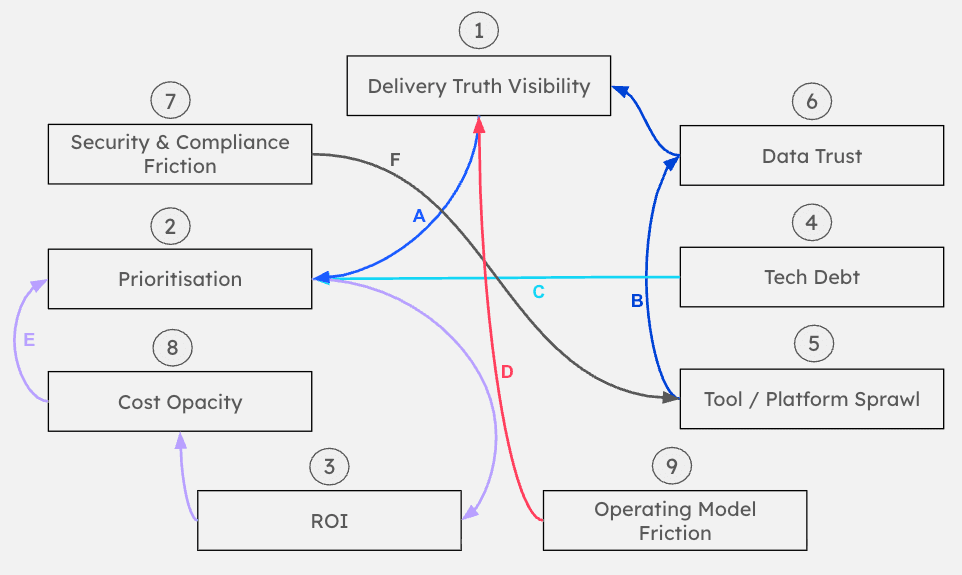
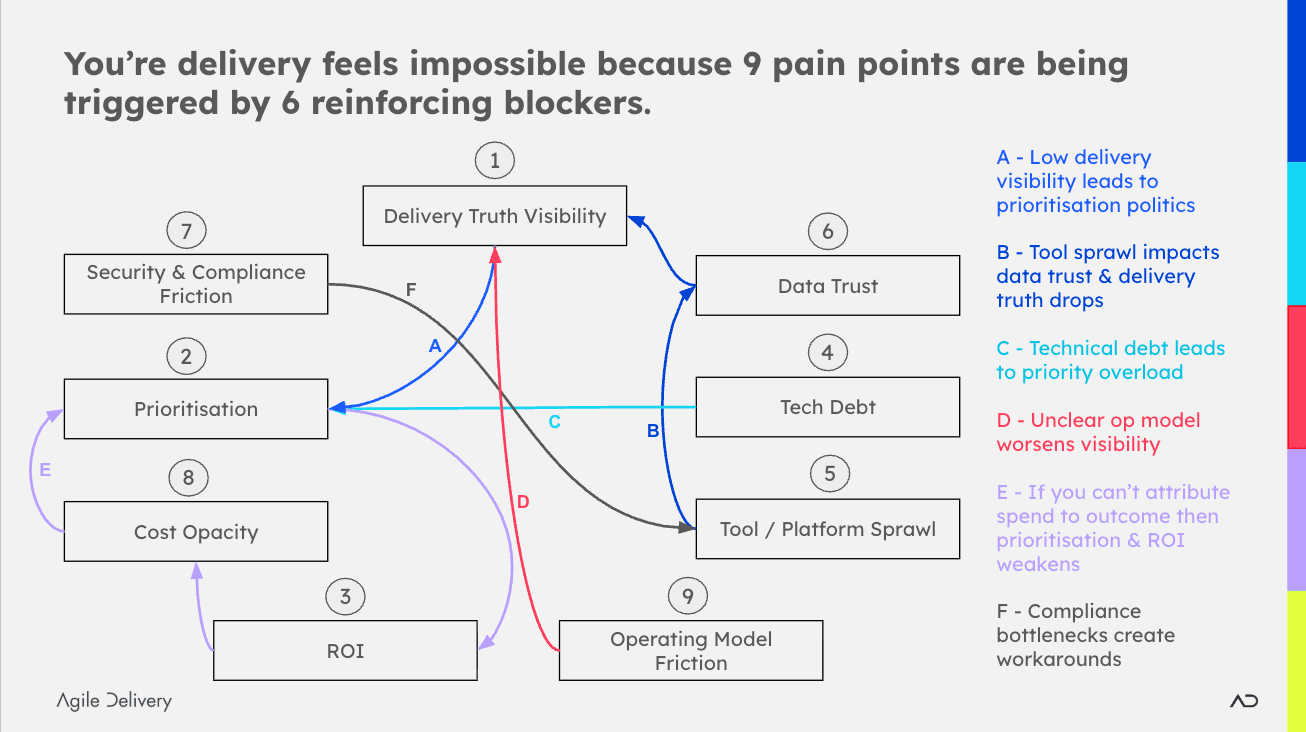
The nine delivery pains this snapshot gets underneath
1. Status accuracy and visibility
Progress looks fine on paper until slippage shows up late.
2. Too many priorities
Too many priorities, not enough throughput.
3. ROI doesn't show up
Pilots everywhere (especially AI), measurable value nowhere.
4. Technical debt constraints
Every release negotiates with legacy and regressions.
5. Tool/platform sprawl
Delivery information is spread across too many tools, so reporting and control become inconsistent.
6. Data trust and forecasting
You can't make decisions because forecasts and KPIs aren't trusted.
7. Security/compliance friction
Delivery slows because approvals and safe patterns don't flow.
8. Cost opacity
Spend is a surprise, and you can't link it to outcomes.
9. Operating model friction
Delayed handoffs and unclear decision-making are slowing down delivery.
Six recurring blockers that keep delivery stuck
These issues reinforce each other, which is why isolated fixes don't stick.
A) Inconsistent status weakens prioritisation
If reporting isn't reliable, prioritisation turns into debate, too much gets approved, and benefits arrive late.
B) Tool sprawl fragments delivery control
As tools multiply, reporting fragments, data trust drops, and leaders stop believing the picture.
C) Technical debt reshapes priorities
When releases get riskier, priorities get pulled into workarounds and firefighting.
D) Operating model friction slows decisions
Unclear ownership and decision rights create delays, and delivery oversight becomes inconsistent.
E) Cost opacity weakens value decisions
If cost can't be compared to value, portfolios get overcommitted and underfunded.
F) Compliance bottlenecks create workarounds
When governance is slow or unclear, teams route around it and inconsistency grows.
What you get
Your main deliverable is an Executive Readout Deck you can use with leadership, delivery, product, and partners.
Current delivery picture
A single view of scope, milestones, dependencies, risks, and readiness.
Top blockers and risks
Ranked by impact, with practical mitigations and clear ownership.
Prioritisation reality check
Where commitment exceeds capacity, what's driving constant re-planning and context switching, and what to stop doing.
Tooling and reporting check
What's helping vs hurting (sprawl, reporting integrity, forecasting reliability).
Options
2–3 realistic routes forward with trade-offs across people, process, tooling, training, and decision cadence.
90-day action plan
A practical plan for the next 90 days that links actions to outcomes, so you can start next week.
What the 90-day plan looks like
It's one slide (or one page), structured as a simple table:
Outcome → Actions → Owner → Evidence/Deliverable → Measure
It's sequenced and realistic. It's written so teams can execute without guesswork and leadership can track progress with confidence.
How it works
Step 1: Snapshot Fit Check
A short call to confirm what's happening, what's at stake, and whether this snapshot is the right intervention.
If you want to proceed, I'll send a one-page scope summary for agreement (what I'll review, who I'll speak to, timetable, deliverables). That becomes the basis of the short SOW.
Step 2: Delivery Control Snapshot
- Day 1:kick-off + evidence review + 1–2 interviews
- Day 2:2–3 interviews + walkthrough of how work moves end-to-end
- Day 3:synthesis + Executive Readout Deck + 60–90 minute readout
Proof you can see
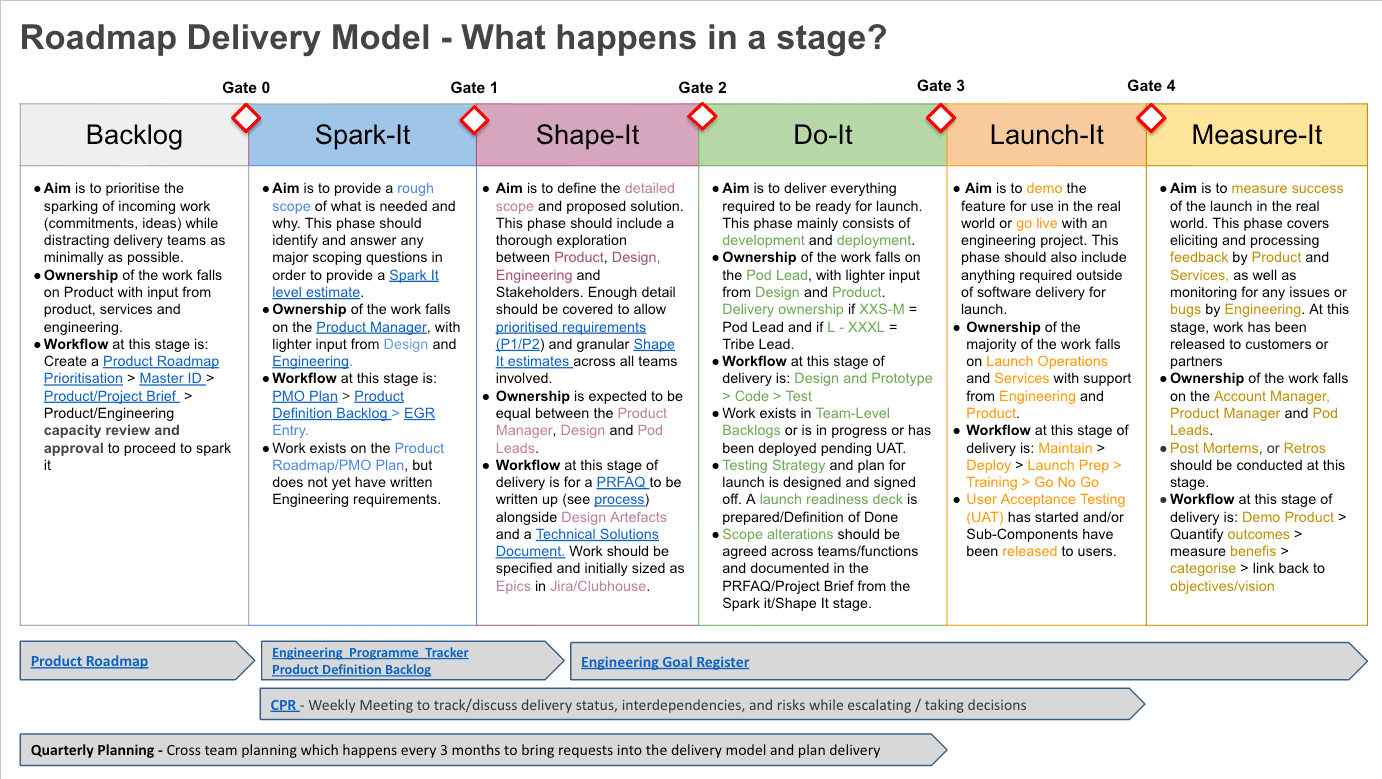
These screenshots are examples of the kinds of control artefacts organisations typically need once the underlying issues are clear. You won't receive fully-built versions of these from the 3-day snapshot — the snapshot will tell you whether you need them, what "good" looks like, and how to implement them in a sensible sequence.
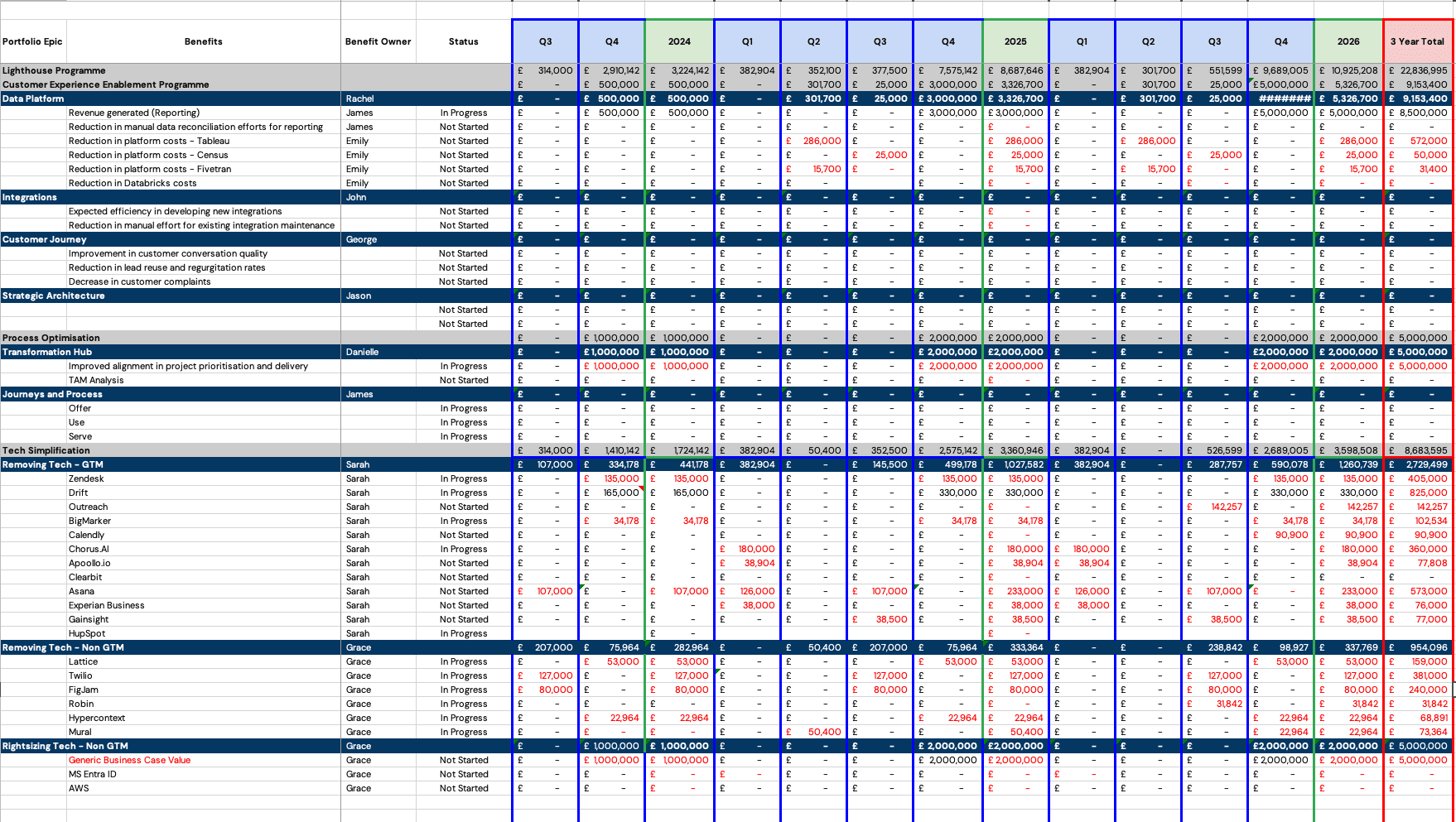
Example 1: Benefits and ROI tracking
A benefits tracker that links initiatives to owners, timing, and measurable outcomes, so spend and resourcing decisions can be made with confidence.
Usually recommended when: there's no consistent way to show what money is being spent on, what value is expected, and who owns it.
Maps to: Pain 8, 3, 2 • Blocker E
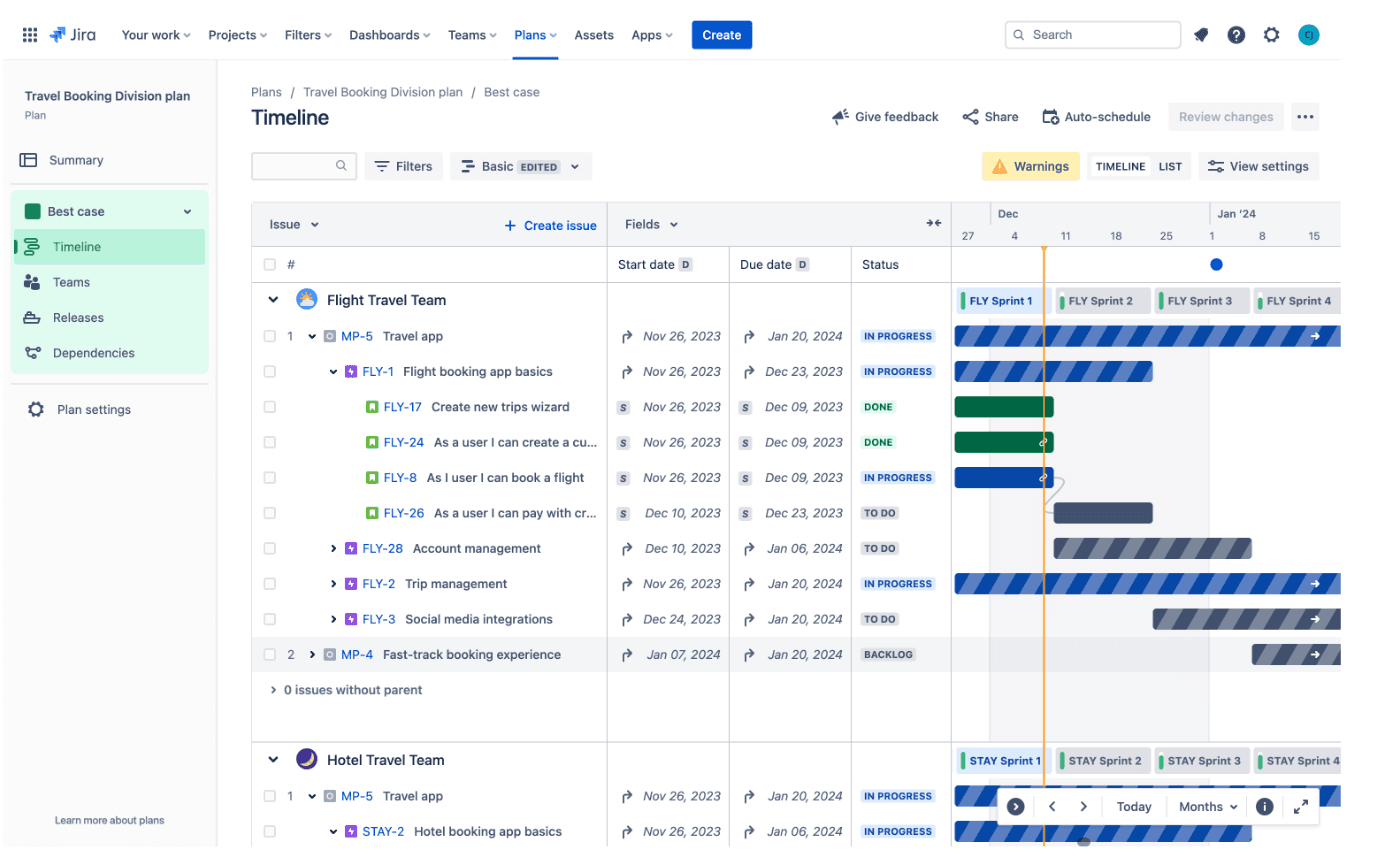
Example 2: Integrated plan and delivery visibility
A programme plan/roadmap view that gives one consistent picture of milestones, dependencies, and progress.
Usually recommended when: teams run separate plans, reporting formats vary, and slippage appears late because dependencies aren't visible early.
Maps to: Pain 1, 2, 6 • Blocker A
Example 3: Operating model and handoff clarity
A target operating model that makes ownership, decision points, and "who has the baton" explicit, reducing delays and rework at handoffs.
Usually recommended when: work slows at interfaces due to unclear decision rights, unclear ownership, and inconsistent ways of working.
Maps to: Pain 9, 1 • Blocker D
Pricing
Delivery Control Snapshot
£3,000 + VAT
FAQs
Do you need access to Jira/Azure DevOps/etc.?
Not for the snapshot. Interviews, existing artefacts, and a walkthrough usually surface what matters. If tool access would materially improve accuracy, we'll agree it before we start.
What happens on the Fit Check?
We confirm whether this is the right intervention. If it is and you want to proceed, I'll send a one-page scope summary for sign-off so the paid work is predictable.
Is the Fit Check the same thing as the Snapshot?
No. The Fit Check is a short pre-step. The Snapshot is the paid 3-day engagement that includes interviews, analysis, and the Executive Readout Deck.
What if it isn't a fit?
I'll tell you. If you want, I'll suggest the simplest next step.
Free, no login
Not ready for the full Snapshot?
Try the Delivery Confidence Index. Answer 15 short questions and get a self-read of where your delivery is exposed, in about four minutes. It uses the same delivery pains and blockers this Snapshot is built on.
If you want accurate delivery reporting and a decision-ready plan in days, book a Fit Check.
Let's confirm what's happening, what's at risk, and what to do next.