

Customer story
One Client View: Aligning a Global Insurance Broker on One Salesforce Platform
Global Insurance Broker
Programme-level assurance and leadership for CRM/Salesforce/ERP delivery—so scope stays controlled, risks surface early, readiness is real (UAT, training, data), and your board gets evidence, not optimism.
Trusted by leading brands
When you bring me in, you get a safe pair of hands who moves fast without losing grip, because I blend programme discipline (PRINCE2/MSP) with pragmatic Agile delivery (SAFe/Scrum), and I obsess over the things that actually make transformations succeed: clarity, governance, decision cadence, dependency control, business readiness, and benefits.
(And yes—this is built for the real world: multiple vendors, messy data, conflicting exec priorities, and people who still have a day job.)
Assurance, when done properly, exists to give senior leaders timely, credible information to make decisions—not to generate paperwork.
Not "tick-box methodology" so that you spot trouble early and take action while it's still cheap.
Clear off-ramps, stage gates, and evidence packs) so your steering doesn't become a weekly debate club.
So go-live doesn't become a late surprise because "ready" means people, process, data, controls, and support—at the same time.
Global Insurance Broker




Global Manufacturer


Asset Finance Provider


Major UK Airport


FinTech Scale-up


Global Consultancy


Clinical Publisher
A simple four-phase delivery system that replaces governance theatrics with evidence, control, and board-ready confidence.
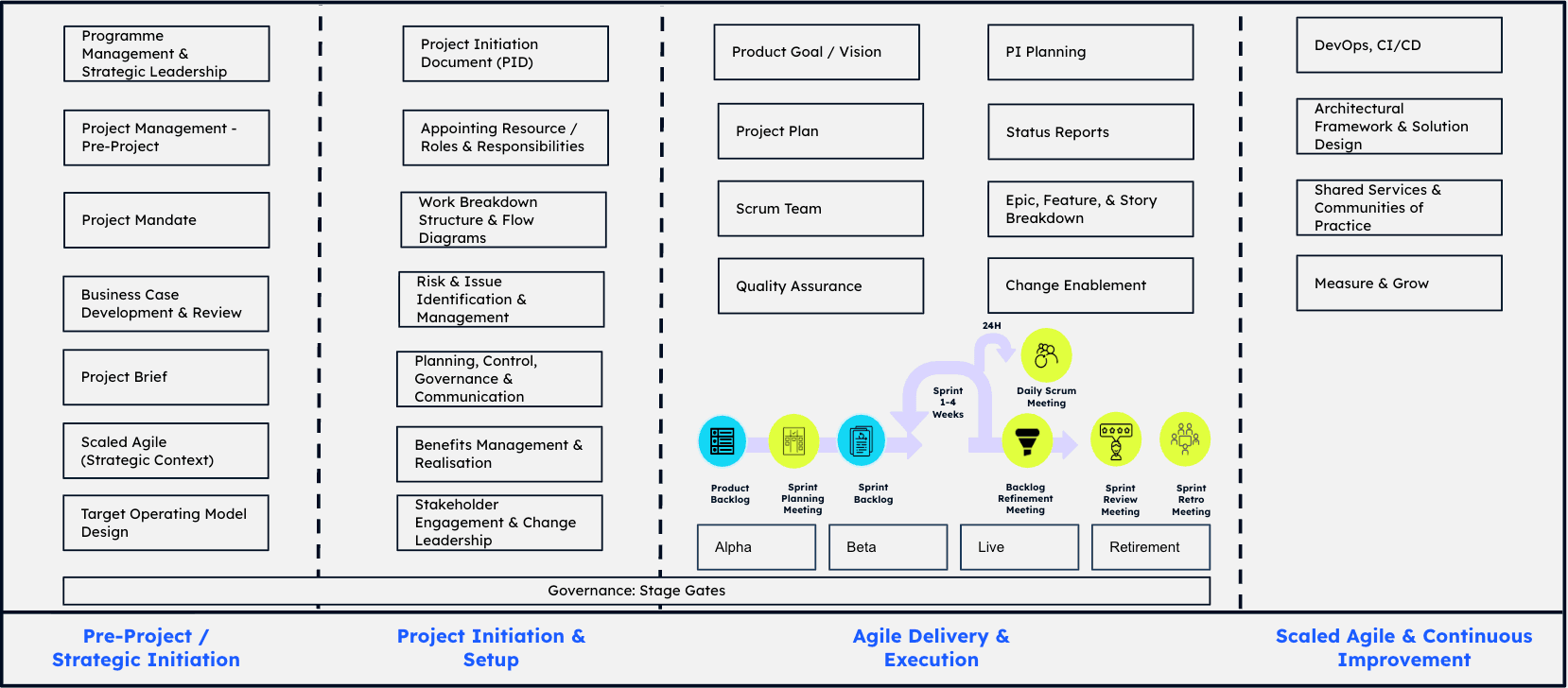
So that you stop funding ambiguity, protect the investment, and align leadership early.
So that decisions speed up, teams stop wobbling, and delivery becomes predictable.
So that you ship in increments, surface issues early, and go live with the business genuinely ready.
So that the programme becomes an internal capability—and outcomes keep landing after I've gone.
In the first 10 working days, I typically deliver:
I didn't learn "delivery" from a textbook first; I learned it in retail—watching my dad count cash after long weeks, seeing what it feels like when a single incident becomes legal evidence, and living through the era where supermarkets crushed local shopping, dot-com rewired discoverability, and social media changed how people expect brands to behave.
So when I walk into your transformation, I don't treat it like an abstract project—I treat it like real money, real people, and real reputational risk.
I then went into sales and marketing, did the door-knocking, negotiated face-to-face, ran promotions on clunky green-screen ERP systems (the kind that felt like the Matrix), and learned how to speak to humans—not just stakeholders.
And yes, I studied philosophy too, which sounds odd until you realise what it gives you in a programme: the ability to reason from first principles, spot weak assumptions, and persuade people with clean arguments (especially when the room is tense and decisions are hard).
That's why I'm good at the bit most programmes quietly fail at: bringing people with you.
I provide programme-level delivery assurance (and can also step in as Programme Director / Programme Manager) for complex CRM / Salesforce / ERP / data transformations—especially when the stakes are high and you need board-level confidence.
Typically: Programme Director, Programme Manager, or Delivery Assurance Lead (often bridging business + tech across vendors, data, change, UAT, and go-live).
I'm London-based (Paddington), and travel isn't an issue—where the team is, that's where I'll be.
Yes. Hybrid is fine, and if you need 5 days a week on-site in London, that works too.
As a guide (depending on scope, risk, vendor complexity, and governance load):
Tell me the context and timeline and I'll give you a straight answer quickly.
Outcome-led. I use PRINCE2/MSP-style controls where governance and risk demand it, and Agile/SAFe/Scrum cadence where it accelerates delivery—most real programmes need both.
PRINCE2 • MSP • SAFe • Scrum Master (plus Salesforce BA accreditation).
Yes—and I'm often brought in to get vendors into one operating rhythm (shared plan, shared governance, shared "done") so you stop paying for misalignment.
I treat adoption as part of delivery: readiness, training, comms, cutover, and hypercare are planned from day one (not bolted on at the end).
On request—share your timeline and I'll be candid about fit and start dates.
Email: anna@agileprojectdelivery.co.uk
Or book a call: https://calendly.com/anna-agileprojectdelivery/30min
Let's agree the plan, decisions, and get back to board-ready confidence.