Financial Services
Insurance 101: A Field Guide for Technology and Programme Leaders
You’ve been put on a requirements call and everyone in the room speaks a language you don’t. This is the plain-English guide to what they’re all talking about, with every term defined before it’s used.
If you build software or run programmes for a living, sooner or later you land in insurance. It’s one of the largest buyers of technology in the country, and the work is genuinely interesting once you can follow the conversation. The problem is the first month. You sit in a requirements workshop and people trade words like slip, bind, MGA, combined ratio and subrogation as if everyone was born knowing them. Nobody stops to explain, because to them it’s just Tuesday.
I’ve watched sharp delivery people go quiet in those rooms, not because they couldn’t grasp the ideas, but because nobody had ever laid them out. So here’s the guide I wish someone had handed me. It defines every term in plain words, uses simple products and metaphors, and builds up from one idea to the whole ecosystem. Read it start to finish, or jump straight to the thing you got stuck on.
Throughout, I’ll use one real, publicly known group as the running example: Howden. It’s a good anchor because it does most of the jobs in the industry under one roof, so once you can see how its parts fit, you can read almost any insurance org chart. Nothing here is about any specific project. It’s the background context, the part nobody writes down.
Why this guide exists
Insurance has a vocabulary problem. It’s an old industry, so its words are old, and many of them come from a time when risks were literally ships and warehouses. The words stuck even as the risks changed. That’s why a modern claims platform still has a field for a slip, a document named after a slip of paper passed around a coffee house three centuries ago.
The good news is that the concepts are simple once the jargon is stripped off. There are only a handful of core ideas. Everything else is a variation on them. Get the core, and the rest of the glossary stops feeling like a foreign language and starts feeling like labels for things you already understand. So we’ll start with the single idea the whole industry is built on.
The one idea underneath everything: risk transfer
Insurance is risk transfer. That’s the whole thing. You have a risk you can’t comfortably carry, so you pay someone else to carry it for you.
Picture a shopkeeper. A fire would wipe her out: she can’t absorb a hundred-thousand-pound loss. So she makes a trade. She pays a small, certain amount every year, and in return an insurer promises to cover the large, uncertain loss if it ever happens. She has swapped a scary maybe for a manageable definite. That payment is the premium: the price of moving the risk off her shoulders and onto someone else’s.
Now, how can the insurer afford to make that promise to thousands of shopkeepers? Because of risk pooling. Everyone pays into a pot. In any given year, only a few shops burn down. The many premiums from the unlucky-free majority pay the claims of the unlucky few. The insurer’s skill is working out how big the pot needs to be, which is a numbers game, and we’ll come to the people who do that maths later.
Hold these three words and most of insurance falls into place. Risk transfer: you move a risk to someone else. Premium: the price of doing that. Risk pooling: many people’s premiums fund the few who claim. Everything else is detail hanging off this frame.
A very short history of insurance
A little history explains why the words are so strange. Merchants have shared risk for thousands of years: traders in the ancient world would spread cargo across several ships so one sinking didn’t ruin anyone. But the recognisable shape of modern insurance grew up around shipping and fire.
In 1680s London, a man named Edward Lloyd ran a coffee house near the docks. Ship owners, merchants and men with money to risk gathered there to do deals. If you owned a ship heading to the West Indies, you needed someone to promise to pay if it went down. Wealthy backers would agree to cover a share of the voyage, and each one wrote his name under the details of the risk to record how much he was taking on. That act, writing your name under the risk, is where the word underwriting comes from. That coffee house grew into Lloyd’s of London, which is still a marketplace today.
Fire did the same for property. After the Great Fire of London in 1666 destroyed thousands of buildings, the first fire insurance offices appeared. They even ran their own fire brigades and fixed metal badges to insured buildings so the brigade knew which houses to save. The point of both stories is the same: insurance was invented to make catastrophe survivable, and the language we still use was set in that era.
The ecosystem: who’s who
On a requirements call, half the confusion is that people use different words for the parties and assume you know which is which. Here they are, in the order the money and the risk flow.
The policyholder (the client)
The one who has the risk and wants rid of it. A business or a person. They pay the premium and, if things go wrong, they make the claim.
The broker (acts for the client)
The client’s agent and guide. The broker works out what cover is needed, shops it around the market, negotiates the terms and price, and fights the client’s corner when a claim is disputed. Think of a mortgage broker: they don’t lend you the money, they find you the best lender and handle the paperwork. Brokers act for the client, not the insurer, and that distinction matters.
The insurer (the carrier, the underwriter)
The one who actually takes the risk and holds the money to pay for it. You’ll hear this party called three things that mean roughly the same thing in casual use: the insurer, the carrier (because it carries the risk), and the underwriter (the role that decides to accept it). If the broker is the mortgage broker, the insurer is the bank that puts up the cash.
The reinsurer (insures the insurer)
A backstop behind the backstop. Insurers buy their own insurance from reinsurers, so that a single hurricane or a run of large claims doesn’t sink them. The client never sees the reinsurer, but it’s a huge part of how the industry stays standing. More on this below.
Carrier vs wholesale: two different questions
This one trips up almost everyone, because the two words sound like they belong to the same list. They don’t. They answer different questions.
Carrier answers “who actually holds the risk and pays the claim?” That’s the insurer, at the end of the chain. Wholesale and retail answer a different question: “how many broker layers sit between the client and that carrier?” A retail broker is the one who talks to the client directly, like the shop you walk into. A wholesale broker sits behind the retail broker and has access to specialist markets, like Lloyd’s, that the retail broker can’t reach on their own. Think of the wholesale broker as an importer with connections to suppliers the local shop can’t deal with directly.
So a risk might travel: client → retail broker → wholesale broker → carrier. Carrier is a position in the risk chain. Wholesale and retail are layers of distribution. You can be a wholesale broker and never carry a penny of risk.
MGA vs an underwriting company
Here’s the other one that snags people. A Managing General Agent (MGA) looks and behaves like a small insurer. It quotes, it binds cover, it might even handle claims. But it doesn’t hold the risk. An insurer has given it delegated authority: permission to underwrite on the insurer’s behalf, up to agreed limits and within agreed rules.
The clean metaphor is a letting agent. A landlord (the insurer) owns the properties and takes the ultimate risk. The letting agent (the MGA) can show tenants round, agree terms and sign the tenancy on the landlord’s behalf, but only within the rules the landlord set and only up to a certain rent. An underwriting company, by contrast, is the landlord: it owns the risk and the capital behind it. MGAs are popular because they let specialists underwrite a niche brilliantly without having to raise the enormous capital a full insurer needs.
What “specialty” insurance means
Specialty insurance is the cover for risks that are too big, too odd or too complex for an ordinary insurer to touch. Your car and your house are commodity risks: millions of similar ones, easy to price, sold in bulk. Specialty is the other end. A container ship. An offshore wind farm. A film production. A cyber-attack on a bank. A kidnap-and-ransom policy for staff in a dangerous region. Each one needs a human to think hard about it, and a market willing to write something unusual. That’s the world of the London market and Lloyd’s, and it’s where a lot of the technical roles you’ll meet actually sit.
The Howden worked example
Now put the parties together using a real group. Howden is one of the larger independent insurance intermediaries, and it’s a useful map because it spans most of the industry under one name. This is all public corporate information, the kind on the group’s own website.
- Howden is a broker. At its heart it acts for clients: understanding their risks and placing cover in the market. That’s the intermediary role from the ecosystem above.
- DUAL is its MGA, the underwriting business. DUAL sits on the other side of the line. It underwrites on behalf of insurers under delegated authority. So within one group you can see both jobs: the broker that acts for the client, and the MGA that acts for the insurer.
- The group also spans specialty. Broking for the large, complex risks that need the London market and Lloyd’s, rather than off-the-shelf cover.
- And reinsurance. Broking the cover that insurers themselves buy, connecting carriers to reinsurers.
- And pensions and employee benefits. Advising employers on pensions, life cover, income protection and private medical insurance for their staff.
Notice what that structure tells you. A big group doesn’t pick one role; it collects several, because the same corporate clients need all of them. The broking arm places your business insurance, the specialty arm handles the unusual risks, the reinsurance arm serves insurers, and the benefits arm looks after your people. Once you can see those parts as separate jobs that happen to share a logo, almost any insurance organisation becomes readable. When you’re next handed an unfamiliar org chart, ask of each business unit: is this acting for the client (broking), acting for the insurer (MGA or carrier), or serving insurers themselves (reinsurance)? That single question sorts most of it.
What is Lloyd’s of London?
The single most useful thing to know: Lloyd’s of London is a marketplace, not an insurance company. It doesn’t sell you a policy. It’s the place, and the set of rules, where insurance gets bought and sold. The closest everyday comparison is a stock exchange. The exchange doesn’t sell you shares; it’s where buyers and sellers meet under agreed rules. Lloyd’s is that, for risk.
Inside that marketplace, a few roles matter:
A Lloyd’s syndicate
A group of investors who pool their money to underwrite risks at Lloyd’s for a year. Think of a supper club that reforms every year: members can join or leave between years, but for this year, this group has put its money together to back this book of business. The syndicate employs the underwriters who actually price and accept risks.
Capital providers (Names)
The people and institutions who put up the money behind a syndicate. Historically these were wealthy individuals called Names, who backed risks with their entire personal fortune, unlimited liability, which made a lot of money in good years and ruined some in bad ones. Today most of the capital comes from companies and institutions with limited liability.
A cover holder
A company outside Lloyd’s that’s been trusted to bind cover on a syndicate’s behalf, under a written agreement called a binding authority. If that sounds like an MGA, it’s because it’s the same idea, operating inside the Lloyd’s market.
So the flow at Lloyd’s reads like this: capital providers fund a syndicate, the syndicate’s underwriters accept risks, and brokers bring those risks in from clients around the world. It’s the coffee house, scaled up and regulated, still doing exactly what it did in 1688. You can read more on the official Lloyd’s of London site.
What is reinsurance?
Reinsurance is insurance for insurers. Once you say it that plainly, it’s obvious. An insurer takes on a lot of risk. What happens when too many of those risks go wrong at once, a flood, a storm, a pandemic? It could run out of money. So the insurer does exactly what its own customers do: it transfers some of the risk to someone bigger. It pays a reinsurer part of the premium, and the reinsurer agrees to cover part of the claims.
Reinsurance does two jobs. First, it lets an insurer say yes to bigger risks than its own capital could safely support, because it isn’t carrying the whole thing alone. Second, it smooths out the bad years. Instead of one catastrophic loss threatening the company, the hit is shared, and the insurer survives to trade next year. It’s the same risk-transfer idea from the very start of this guide, just one layer up the chain. And there’s a layer beyond it, too: reinsurers themselves buy cover, called retrocession. Risk keeps getting passed along until it’s spread thin enough that everyone can carry their share.
The broking flow, step by step
This is the sequence most insurance systems are built to support, so it’s worth knowing cold. It’s the life of a policy, from a client’s first worry to the day it renews. I’ll define each new term as it appears.
1. Risk identified
The client has something to protect: a fleet, a factory, a professional practice. The broker’s starting point is understanding what could go wrong and how badly.
2. Fact find
The broker gathers the detail. What does the business do, where, with what, and what’s the claims history? Good data here is what makes a good quote possible later. Bad data is where a lot of disputes begin.
3. Market submission
The broker packages the risk and takes it to insurers. On a large or specialty risk, this is where the slip appears: the market document that describes the risk and the terms, which insurers sign to show how much of it they’ll each take. Putting the risk into the market like this is called placement.
4. Quotes and indications
Insurers respond. An indication is an early, non-binding steer on likely price and terms, useful for deciding whether to go further. A quote is a firm offer the client can actually accept. The broker compares them, not just on price but on what’s covered.
5. Terms negotiated
The broker pushes on price, limits, exclusions and wording. This is where the broker earns their keep for the client, and where a wordings specialist (more on them later) makes sure the policy actually says what everyone thinks it says.
6. Bind
The client accepts, and the insurer commits. To bind is to make the cover live and legally binding: the insurer is now “on risk.” Where an MGA or cover holder holds binding authority, they can do this on the insurer’s behalf.
7. Policy issued
The policy document is produced: the contract that sets out exactly what’s covered, what’s excluded, the limits and the price. This is the source of truth everything downstream refers back to.
8. Ongoing servicing
The policy isn’t static. When the client’s risk changes mid-year, adding a vehicle, buying a building, the broker makes a Mid-Term Adjustment (MTA), and the change is recorded as an endorsement: a formal amendment to the contract, which may change the premium.
9. Claims handling
Something goes wrong and the client makes a claim. The insurer checks it’s covered, works out what’s owed, and pays. This is the moment the whole product is judged, and the broker is back in the client’s corner. We’ll unpack the claims machinery in the finance section.
10. Renewal
Roughly once a year the policy ends and the client decides whether to buy it again. At renewal, terms and price are re-negotiated in light of the year’s claims and any changes to the risk. It’s the busiest, most system-intensive moment in a broker’s calendar.
Two more terms belong here, because they change who’s doing the broking. A Broker of Record (BOR) letter is how a client formally appoints a broker as its representative to the insurers, replacing any previous one; it re-assigns who the market deals with. A Letter of Authority is the client’s written permission for a broker to act on its behalf, for example to gather information or approach the market. Both are simply the paperwork of “this broker speaks for me now.”
Insurance as a financial service
It’s easy to think of insurance as a product business. It isn’t, really. It’s a financial services business that happens to sell promises. That reframing explains a lot of the roles, the regulation and the reporting you’ll be building systems for. Four things make it financial to its core.
It handles money that isn’t its own
When you pay a premium to a broker, that money is usually on its way to an insurer. While the broker holds it, it isn’t the broker’s money. This is client money, and there are strict rules, the FCA’s Client Assets rules, or CASS, about keeping it separate from the firm’s own funds. It works like a solicitor’s client account: ring-fenced, so that if the firm goes under, your premium isn’t lost with it. Holding other people’s money like this also creates a fiduciary responsibility: a legal duty to act in the client’s best interest ahead of your own. That duty is why conflicts of interest are taken so seriously in this industry.
It carries long-term liabilities
When an insurer writes a policy this year, some of the claims might not surface for years. A workplace illness or a professional negligence claim can arrive long after the premium was banked. So an insurer has to hold money today against claims that haven’t happened yet, or have happened but nobody’s told them. That’s where reserving comes in: setting money aside for future claims. A reserved amount is the pot held for a specific known claim. And Incurred But Not Reported (IBNR) is the estimate for claims that have already occurred but haven’t been reported yet, like knowing some restaurant bills are still coming even though the cards haven’t been charged.
It runs on actuarial science
Someone has to work out how big the pot needs to be and what to charge. That’s actuarial science: the statistics of risk over time. Actuaries build the models that produce the technical price, the price the insurer’s own numbers say a risk should cost, based on expected claims plus costs plus a margin. The market price, what the insurer can actually charge in a competitive market, might sit above or below that technical price, and the gap is a business decision.
Two ratios tell you whether the sums are working. The loss ratio is claims as a percentage of premium: for every £100 taken in, how much went back out in claims. The combined ratio adds running costs on top: claims plus expenses as a percentage of premium. Below 100% means the insurer made money on the underwriting itself; above 100% means it lost money on the insurance and is relying on investment returns to make up the difference. If you only remember one number in this whole guide, make it the combined ratio, because it’s the headline of every insurer’s results.
It has to prove it can pay
Because the whole product is a promise to pay later, regulators insist an insurer holds enough capital to keep that promise even in a bad year. That buffer is the Solvency Capital Requirement (SCR), set under the Solvency II regime. It’s the regulator’s answer to “how much of a cushion is enough?” You’ll also meet two premium measures in the reporting: Gross Written Premium (GWP), the total premium written before any deductions, the top-line number; and Net Written Premium (NWP), what’s left after the premium passed to reinsurers is taken out, reflecting the risk the insurer keeps for itself.
How it’s regulated: the FCA and PRA
Because insurers hold the public’s money and sell promises that must be honoured, the industry is tightly regulated. In the UK, two bodies do most of the work, and they split the job neatly.
The FCA: are you behaving well?
The Financial Conduct Authority is the conduct regulator. It cares about how firms treat customers: honest selling, clear information, fair claims handling, and proper protection of client money. Most brokers deal with the FCA day to day. You can read its remit at fca.org.uk.
The PRA: are you strong enough?
The Prudential Regulation Authority is part of the Bank of England. It cares about financial strength: whether an insurer holds enough capital to survive a bad year and keep paying claims. It’s the solvency regulator behind the conduct rules. See the Bank of England’s Prudential Regulation pages.
The simplest way to hold the two apart: the FCA asks “are you treating people fairly?” and the PRA asks “can you actually pay?” Most large insurers answer to both. That’s the regulatory overlap you’ll hear about, and it’s why so much insurance technology is really about producing evidence: showing the regulator, on demand, that the money is separated, the capital is sufficient, and the customer was treated properly.
The roles you’ll meet
On a requirements call, knowing who does what saves you from the awkward silence when someone says “that’s a question for the wordings team.” The roles split into two groups: the people who face the client, and the technical people behind them.
Client-side roles
Account Executive
The relationship owner. The Account Executive wins and keeps the client, understands their business, and leads the strategy for their cover. Think of them as the senior point of contact who the client rings first.
Account Handler
The one who makes it all happen behind the scenes: processing the paperwork, chasing quotes, issuing documents, handling mid-term adjustments. If the Account Executive is the face, the Account Handler is the engine. Much of the software you build serves this role.
Technical roles
Underwriter
Sits on the insurer’s side. Decides whether to take a risk, on what terms and at what price, and commits the insurer’s capital to it. The broker asks; the underwriter decides.
Actuary
The mathematician of risk. Builds the models that set prices and reserves, and works out how much capital the business needs. When someone mentions the technical price, IBNR or the reserves, an actuary produced the numbers.
Claims adjuster / loss adjuster
The investigator at claims time. A claims adjuster works out what’s owed on a claim. On larger or trickier losses an independent loss adjuster is sent to establish what happened and whether the policy responds. They’re the referee at the scene.
Wordings specialist
The person obsessed with what the policy actually says. They draft and check the exact language, because in a dispute the difference between two words can be the difference between paying a claim and not. In specialty insurance especially, wordings are where the real risk lives.
Risk engineer
The one who visits the actual risk, a factory, a warehouse, a construction site, and advises on making it safer. Better risk means fewer claims, so the risk engineer helps both the client and the insurer. They turn abstract risk into practical improvements.
The products in plain terms
You don’t need to know every product, but a handful of business covers come up constantly. Here they are without the jargon.
Professional Indemnity (PI)
Cover for getting professional work wrong. An architect’s design fails, an accountant’s advice costs a client money, a consultant makes a mistake. PI responds when someone suffers a loss because a professional was negligent. Any advice-based business needs it.
Public Liability (PL)
Cover for harm to the public. A customer slips in your shop, a contractor damages a neighbour’s property. PL pays for injury or damage your business causes to other people or their things.
Employers’ Liability (EL)
Cover for harm to your own staff, an injury at work, an illness caused by the job. In the UK it’s legally compulsory for most employers, which is why nearly every business carries it.
Beyond these sit the specialty lines mentioned earlier, marine, aviation, energy, cyber, political risk and the rest, plus the personal covers everyone knows, motor and home. The pattern is always the same: a defined thing that can go wrong, a price to transfer that risk, and a contract that says exactly what’s covered.
Pensions, benefits and PMI: why they sit alongside insurance
New joiners to the industry are often puzzled that a broking group also does pensions and staff benefits. It seems like a different business. It isn’t, once you see the common thread: they’re all ways of managing financial uncertainty for the same clients. And the buyer is usually the same person, an employer or corporate risk manager, deciding how to protect the business and the people in it.
Employee benefits are the package an employer provides beyond salary: pensions, life cover, income protection, and private medical insurance (PMI), which pays for private healthcare and is usually bought as a staff benefit rather than a personal policy. These protect against life and health risks the way property insurance protects against loss.
Pensions protect against a different risk again: outliving your money. There are two main shapes, and the difference is simply who carries the investment risk.
Defined Benefit (DB)
The employer promises a set income in retirement, usually based on your salary and years of service. If the fund does badly, the employer has to top it up. The risk sits with the employer. These are increasingly rare for new joiners because they’re expensive to guarantee.
Defined Contribution (DC)
You and your employer pay into a pot that’s invested, and your retirement income depends on how much went in and how the investments performed. The risk sits with you. Most new workplace pensions are DC.
Additional Voluntary Contribution (AVC)
Extra money you choose to pay into your pension on top of the standard contributions, to build a bigger pot. The top-ups you opt into.
The full glossary
Every term in one place, grouped so you can find it fast. Skim the group headings, then the bold terms. This is the section to bookmark before your next requirements call.
The parties and the market
- Policyholder
- The client. The person or business that buys the cover and is protected by it. In a corporate programme, the policyholder is usually a company and the buyer is its risk manager, finance director or HR lead.
- Broker
- An intermediary who acts on behalf of the client. The broker finds cover, negotiates the terms and price, and argues the client's corner at renewal and at claims time. Brokers are paid by commission or a fee, and they do not carry the risk themselves.
- Insurer
- The company that takes on the risk in exchange for premium and pays out when a valid claim is made. Also called the carrier or the underwriter. The insurer holds the capital that backs the promise to pay.
- Carrier
- Another word for the insurer: the party that actually carries the risk and holds the capital to pay claims. “Carrier” describes a role in the risk chain, not a distribution layer, which is why it is a different idea from wholesale or retail.
- Reinsurer
- An insurer's insurer. A reinsurer takes on part of the risk an insurer has written, in exchange for part of the premium, so the insurer can write bigger risks and survive a very bad year.
- Managing General Agent (MGA)
- A business the insurer trusts to underwrite on its behalf under delegated authority. An MGA can quote, bind and sometimes handle claims within agreed limits, doing the work of an insurer without holding the capital or the risk.
- Cover holder
- At Lloyd's, a company authorised by a managing agent to enter into insurance on the syndicate's behalf under a binding authority. A cover holder is effectively an MGA operating inside the Lloyd's market.
- Lloyd's of London
- A marketplace, not a company, where syndicates underwrite large and specialty risks and brokers bring those risks in to be priced. It began in Edward Lloyd's coffee house in the 1680s and is now a home of specialty insurance and reinsurance.
- Lloyd's syndicate
- A group of capital providers that pools money to underwrite risks at Lloyd's for a year. A managing agent runs the syndicate and employs the underwriters. Syndicates re-form each year, so a member can join or leave between years.
- Capital providers (Names)
- The investors who put up the money that backs a Lloyd's syndicate. Historically these were wealthy individuals called Names, who accepted unlimited liability. Today most capital comes from corporate investors and institutions with limited liability.
- Wholesale vs retail
- Layers of distribution among brokers, not a description of who holds the risk. A retail broker deals directly with the client. A wholesale broker sits behind the retail broker and reaches specialist markets, such as Lloyd's, that the retail broker cannot access alone.
Doing the deal: the placement lifecycle
- Broking
- The work a broker does: understanding the client's risk, taking it to insurers, negotiating the terms and price, and placing the cover. Broking is advice plus access plus negotiation.
- Placement
- The act of putting a risk into the market and getting insurers to agree to cover it. When a risk is “placed,” one or more insurers have signed up to take it on the agreed terms.
- Slip
- The market document that sets out the risk and the terms, which insurers sign to show how much of the risk they will each take. On a large risk, several insurers each take a share, and the slip records who took what.
- Binding
- The moment cover becomes live and legally committed. To bind is to lock in the agreement so the insurer is now on risk. An MGA or cover holder with binding authority can do this on the insurer's behalf.
- Indications
- An early, non-binding steer on price and terms, given before a full quote. An indication tells the client roughly what the market will charge, so they can decide whether to proceed to a firm quote.
- Policy
- The contract between insurer and policyholder. It sets out what is covered, what is excluded, the limits, the excess, and the price. The policy is the thing everything else on a requirements call is ultimately about.
- Premium
- The payment the client makes to transfer the risk. It is the price of the promise to pay a claim. Premium is the number that flows through almost every insurance system you will ever be asked to build.
- Endorsement
- A formal change to a policy after it has been issued: adding a location, raising a limit, correcting a detail. An endorsement is a documented amendment to the contract.
- Mid-Term Adjustment (MTA)
- A change to a policy partway through its term, usually because the client's risk has changed. Adding a new vehicle, a new building or a higher sum insured mid-year is an MTA, and it often changes the premium.
- Renewal
- The point, usually once a year, when the policy ends and the client decides whether to buy it again. Renewal is when terms and price are re-negotiated, and it is the busiest, most system-heavy moment in a broker's year.
- Broker of Record (BOR)
- A letter from the client that appoints a broker as its official representative to the insurers, replacing any previous broker. A BOR letter re-assigns who the market talks to about that client's business.
- Letter of Authority
- A client's written permission for a broker to act on its behalf, for example to obtain information or approach the market. It is how a broker proves to insurers that it is entitled to represent the client.
Claims and payment
- Claims
- The request a policyholder makes to be paid after a loss. Claims handling is the process of checking the loss is covered, working out what is owed, and paying it. It is the moment the whole product is judged.
- Indemnity
- The principle that a claim payment puts the policyholder back in the financial position they were in before the loss, no better and no worse. Indemnity is why you get the value of the old roof, not a brand-new one.
- Coverage determination
- The decision about whether a specific loss is actually covered by the policy. It compares what happened against what the wording covers and excludes. Grey areas here are where disputes and litigation live.
- Loss adjuster
- An independent expert the insurer sends to investigate a larger or more complex claim: to establish what happened, what it is worth, and whether the policy responds. The loss adjuster is the referee at the scene.
- Reserved amount
- The money an insurer sets aside for a claim it knows about but has not fully paid yet. As more is learned, the reserve is adjusted up or down. It is a jar labelled “this claim, roughly this much.”
- Subrogation
- After paying a claim, the insurer steps into the policyholder's shoes to recover the money from whoever caused the loss. Pay out for the crash, then chase the at-fault driver. Recoveries reduce the net cost of claims.
- Incurred But Not Reported (IBNR)
- An estimate of claims that have already happened but the insurer has not been told about yet. Actuaries add IBNR to known claims so the reserves reflect the true cost of a year, not just the claims reported so far.
Underwriting, performance and capital
- Underwriting
- The work of deciding whether to accept a risk, on what terms, and at what price, then committing the insurer's capital to it. The name comes from Lloyd's, where backers wrote their names under a risk to show the share they would take.
- Underwriter
- The person who does the underwriting. They assess the risk, set the terms, quote the price and decide how much of the insurer's capital to put behind it. The broker asks; the underwriter decides.
- Technical price
- The price the insurer's own models say a risk should cost, based on the expected claims plus costs plus a margin. It is the “recipe price.” The market price is what the insurer can actually charge, which may be higher or lower.
- Loss ratio
- Claims paid as a percentage of premium earned. For every £100 of premium, how much went back out as claims. A loss ratio of 60% means £60 of every £100 was paid in claims. Lower is better for the insurer.
- Combined ratio
- The loss ratio plus the expense ratio: claims and running costs together as a percentage of premium. Below 100% means the insurer made a profit from underwriting before investment income. Above 100% means it lost money on the insurance itself.
- Gross Written Premium (GWP)
- The total premium an insurer has written over a period, before deducting anything. It is the top-line measure of how much business was placed. Programme reporting often starts here.
- Net Written Premium (NWP)
- Premium left after deductions, mainly the premium passed on to reinsurers. It reflects the premium the insurer keeps for the risk it retains on its own books.
- Solvency Capital Requirement (SCR)
- The amount of capital a regulated insurer must hold to be confident it can meet its obligations even in a bad year, defined under the Solvency II regime. It is the regulator's answer to “how much of a buffer is enough?”
Products
- Professional Indemnity (PI)
- Cover for the cost of getting professional advice or work wrong: a mistake in a design, an audit, a piece of consultancy. It responds when a client suffers a loss because a professional was negligent.
- Public Liability (PL)
- Cover for injury or damage caused to members of the public or their property by a business. If a customer slips in your shop or a contractor damages a neighbour's wall, PL responds.
- Employers' Liability (EL)
- Cover for claims from employees who are injured or made ill by their work. In the UK it is compulsory for most employers, which is why almost every business has it.
- Specialty insurance
- Cover for large, complex, unusual or high-value risks that standard insurers will not write: marine, aviation, energy, cyber, political risk, kidnap and ransom, and professional lines. Much of it is placed in the London market and at Lloyd's.
Regulation and client money
- Financial Conduct Authority (FCA)
- The UK regulator for how financial firms behave: fair treatment of customers, honest selling, clear information, and proper handling of client money. The FCA is the conduct regulator that most brokers answer to day to day.
- Prudential Regulation Authority (PRA)
- Part of the Bank of England. It regulates the financial strength of banks and insurers: whether they hold enough capital to keep their promises. The PRA is the solvency regulator sitting behind the FCA's conduct rules.
- Client Money (CASS)
- Premium and claims money a broker holds that does not belong to the broker. Under the FCA's Client Assets rules (CASS), it must be kept separate from the firm's own money, like a solicitor's client account, so it is safe if the firm fails.
- Fiduciary responsibility
- A legal duty to act in someone else's best interest ahead of your own. A broker holding client money, and giving advice the client relies on, carries fiduciary duties. It is why conflicts of interest are taken so seriously.
Pensions and benefits
- Defined Benefit (DB)
- A pension where the employer promises a set income in retirement, usually based on salary and years of service. The employer carries the investment risk. If the fund underperforms, the employer, not the member, has to make up the gap.
- Defined Contribution (DC)
- A pension where the member and employer pay into a pot that is invested, and the retirement income depends on how much went in and how the investments did. The member carries the investment risk. Most new workplace pensions are DC.
- Additional Voluntary Contribution (AVC)
- Extra money a member chooses to pay into their pension on top of the standard contributions, to build a larger pot. AVCs are the top-ups you opt into.
- Employee benefits
- The package an employer provides beyond salary: pensions, life cover, income protection, private medical insurance and wellbeing support. Broking groups advise on these because the buyer is the same employer buying the company's insurance.
- Private medical insurance (PMI)
- Cover that pays for private healthcare: faster access, private hospitals, treatments the client chooses. It is a health risk product, often bought as an employee benefit rather than a personal policy.
The closing frame
If all the terms blur together, hold on to one simple map. Everything in this industry is a way of managing financial uncertainty, and it splits three ways by the kind of uncertainty it handles.
- Insurance protects against loss. The fire, the crash, the lawsuit, the flood. Pay a premium, transfer the risk.
- Benefits protect against life and health risks. Illness, injury, death, the cost of private care. The same trade, pointed at people rather than property.
- Pensions protect against longevity. The risk of retiring and then outliving your savings. A different worry, managed the same way: put money aside now against an uncertain future.
Loss, health, longevity. Three flavours of the same job. Once you see the ecosystem that way, the jargon stops being a wall and turns into labels for a set of ideas you already understand. You won’t be the quiet one on the call any more. You’ll be the technologist who actually gets the business, and that is worth more on an insurance programme than almost any tool on your CV.
Delivering technology into insurance or financial services?
The gap between what the business means and what the requirements say is where insurance programmes leak time and money. We translate between the two, then keep delivery honest against the outcome. Calm, evidence-led, and short enough to act on.
Get in touchFurther reading
Authoritative sources if you want to go deeper than this guide. All are the official bodies behind the topics above.
- •Financial Conduct Authority (FCA). The UK conduct regulator, including the client money and fair-treatment rules that shape most broker systems.
- •Bank of England: Prudential Regulation (PRA). How insurers’ financial strength and capital are supervised.
- •Lloyd’s of London. The specialty insurance and reinsurance marketplace, with clear explainers on syndicates and cover holders.
- •Association of British Insurers (ABI). The trade body, with plain-English guides to products and how cover works.
- •Chartered Insurance Institute (CII). The professional body for the industry, and the source of the qualifications many of your colleagues hold.
About the author
Anna Bromley is Director of Agile Delivery. She leads transformation programmes across financial services and insurance, translating between the business people who own the risk and the technology teams who build the systems, and keeping delivery honest against the outcome that was promised.

You may also like…

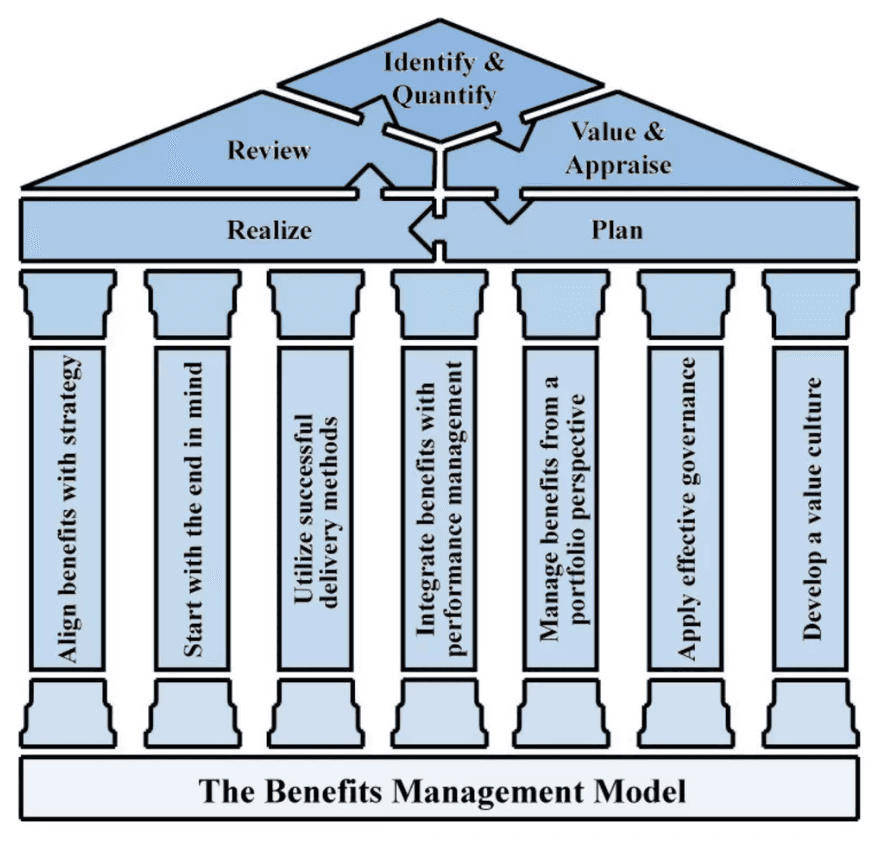
Managing Benefits: Ensuring Transformation Programmes Deliver Value
Frequently asked questions
What is the difference between a broker and an underwriter?
A broker works for the client. They find cover, negotiate terms and argue the client's corner at claims time. An underwriter works for the insurer. They decide whether to take the risk, on what terms, and at what price, then commit the insurer's capital to pay claims. The broker asks; the underwriter decides.
What is an MGA (Managing General Agent)?
An MGA is a business the insurer trusts to underwrite on its behalf. The insurer delegates authority to quote, bind and sometimes handle claims within agreed limits, and the MGA does the work of a small insurer without holding the risk itself. Think of a letting agent who can sign tenancy agreements on the landlord's behalf, up to a set rent.
What is Lloyd's of London?
Lloyd's is a marketplace, not a company. It is a physical and regulated market where syndicates of investors underwrite large, complex and specialty risks, and brokers bring those risks in to be priced. It began in Edward Lloyd's coffee house in the 1680s, where merchants insured ships. Today it is one of the main homes of specialty insurance and reinsurance.
What is reinsurance?
Reinsurance is insurance for insurers. An insurer passes on part of the risk it has taken to a reinsurer, in exchange for part of the premium. It lets an insurer write bigger risks than its own capital could safely support, and it smooths out the shock of a very bad year, such as a hurricane or a run of large claims.
What is the difference between wholesale and retail insurance?
Retail and wholesale describe layers of distribution, not who carries the risk. A retail broker deals directly with the client. A wholesale broker sits behind the retail broker and reaches specialist markets the retail broker cannot access alone, such as Lloyd's. The carrier, the insurer that actually holds the risk and pays claims, sits at the end of both.
Why do pensions, employee benefits and private medical insurance sit alongside insurance?
They are all forms of managing financial uncertainty for the same clients. Insurance protects against loss, employee benefits and private medical insurance protect against life and health risks, and pensions protect against outliving your money in retirement. Broking groups advise on all three because the buyer, often an employer or a corporate risk manager, is the same person.